Resources
Winter Operation
Guidelines
Ontario winters are unforgiving. Our evidence-based guide covers the vehicle preparation, driving adjustments, and emergency protocols every driver needs before the first snowfall.
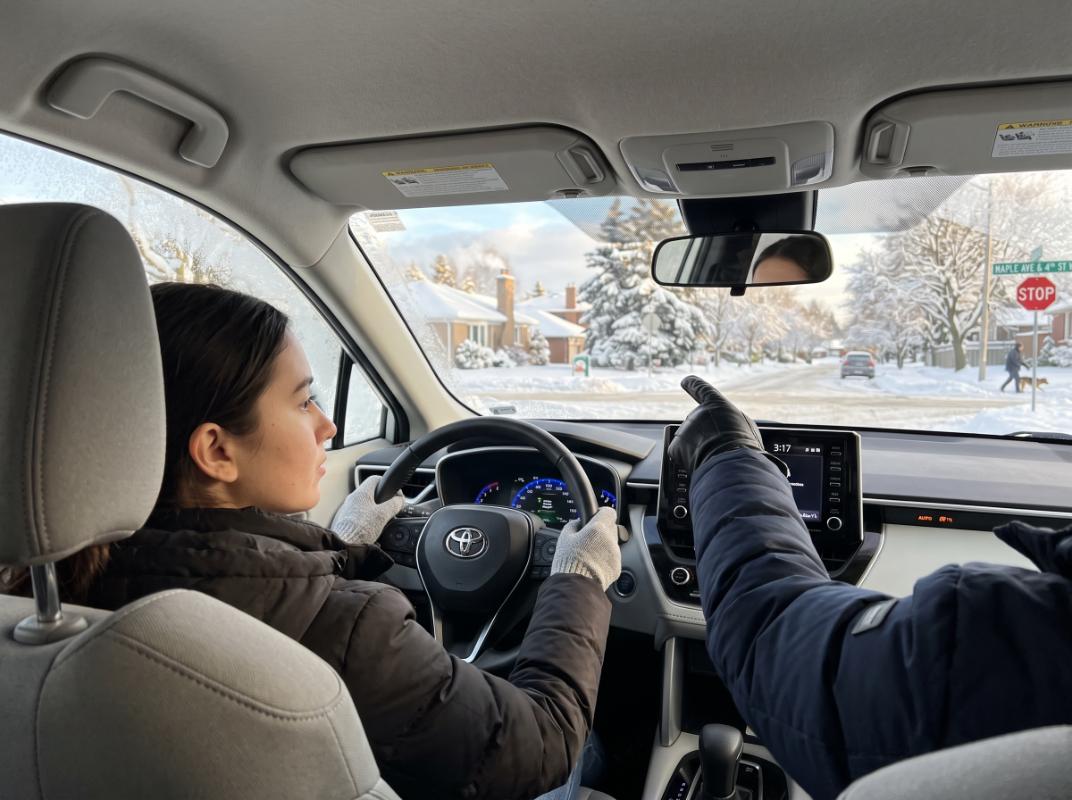
Survive and Thrive in Ontario Winters
Black ice, reduced visibility, and extended stopping distances make winter driving Ontario's highest-risk season. The drivers who handle it safely are not braver — they are better prepared. This guide gives you the vehicle knowledge, technique adjustments, and emergency toolkit to drive confidently when temperatures drop.
Four Pillars of Winter Safety
Vehicle Preparation
Switch to winter tires by the first frost (legally required in some areas). Check antifreeze concentration, battery health, wiper blades, and ensure your washer fluid is rated to -40°C before the season starts.
Adjusted Stopping Distances
Ice reduces tire grip by up to 80% compared to dry pavement. In winter conditions, multiply your normal following distance by 3 and begin braking significantly earlier than you think necessary.
Skid Recovery
In a rear-wheel skid, steer smoothly into the skid direction while easing off the accelerator. In a front-wheel skid, ease off gas and avoid braking. Never jerk the wheel — smooth, controlled inputs are critical.
Emergency Kit
Keep a winter emergency kit in your vehicle: a blanket, snow brush/ice scraper, jumper cables, a shovel, sand or cat litter for traction, a flashlight, and a fully charged phone charger at all times.
Ready to Start Driving?
Spots fill up fast. Book your first lesson today and take the first step toward your full G licence.